

Enterprise innovation is a long trek through a complex landscape. To navigate the maze, you need to be clear on the final objectives and the initiatives necessary to meet them. You need to establish a timeline that includes all the significant milestones to be hit. You need to consider the dependencies and potential roadblocks, as well as how you’ll navigate them. And you’ll need to know what resources each initiative will require at various stages in the process.
Roadmapping is the discipline associated with planning innovation projects over time. The pipeline from ideation to implementation is complex and intricate, and a roadmap provides a visual representation of that process, simplifying and communicating its complexities.
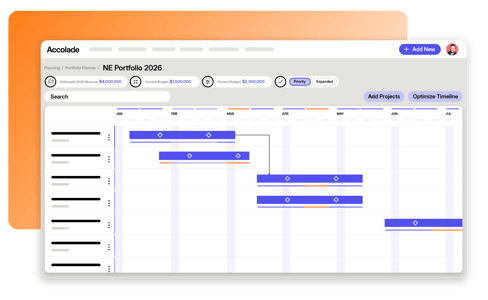
Most innovation managers have some version of the roadmapping process that works for them. (It would be almost impossible to manage an innovation portfolio without a roadmap.) It’s one of the six innovation disciplines necessary for managing innovation at the enterprise level—the others being prioritization, governance, enablement, methodology, and reporting.
Growth innovation represents the future of enterprise innovation management and will significantly reshape how we approach these disciplines. Let's briefly define growth innovation before examining its influence on roadmapping.
What is growth innovation?
Growth innovation is an approach to innovation management that prioritizes growth as the most critical outcome and manages every innovation activity accordingly. It’s an operational ideology that impacts every step in the innovation process from prioritizing initiatives to launching new products.
This approach came from observing how Wellspring’s most successful clients managed their innovation portfolios and processes. These organizations have consistently increased innovation pipeline throughput, portfolio value, and profit margin by aligning their people with three principles essential to growth innovation:
- Growth
Growth innovation hinges on clearly defining enterprise growth objectives, which become integral to the overall innovation strategy. This ensures that all innovation activities directly contribute to at least one of these established growth targets. - Visibility
To effectively manage growth innovation, a central platform is essential for consolidating all innovation management data, providing all relevant stakeholders with easy access to the information necessary for their respective roles. - Orchestration
The innovation projects in your portfolio are interdependent, and within a growth-innovation framework, the entire portfolio is treated as a unified business case. Regular cross-functional portfolio reviews consider all innovation activities and interdependencies, ensuring that decisions are made within the context of the entire portfolio.
Reinforcing the principles of growth innovation
A Forrester Consulting study we commissioned in 2024 examined how our most successful customers have used Accolade, our strategic innovation portfolio management and orchestration tool, to adapt and improve their innovation approaches.
We hoped to find some helpful best practices we could share with users. But what we discovered was the impact the three principles had on their innovation management:
- An increase in launch pipeline throughput by one significant new product launch every five years
- Accelerated time to market by 15%
- A 10% reduction in their project management budget
- A 1% increase in profit margin from product improvements
Adopting the three fundamental principles of growth innovation resulted in a dramatic improvement in innovation activities and outcomes.
The influence of these principles will become more evident as we examine their impact on the discipline of roadmapping.
How roadmapping has changed through innovation’s evolution
There have been several tectonic shifts in innovation since the 1940s. It’s helpful to think about these shifts as the generations of innovation management, and each had an impact on how enterprises approach roadmapping:
The first generation of innovation management
From the mid-1940s to the early 1980s, corporations recognized that the right innovation could define a company for decades to come. Companies were willing to take significant financial risks if they could possibly lead to a lucrative payoff. As a result, research and development departments were given considerable leeway to explore ideas and opportunities.
Most idea generation, concept development, and opportunity exploration occurred in the fuzzy front end of innovation (FEI). The ideas that emerged from FEI still needed to be developed and marketed. Roadmapping became an essential discipline for planning and coordinating the production, manufacturing, and marketing aspects of the innovation process.
The second generation of innovation management
In the 1980s, the focus shifted towards stockholder value, diminishing the appetite for high-risk investments. This marked the second generation of innovation management (1990s–present), characterized by new priorities and a more short-term focus.
R&D's autonomy decreased, requiring more substantial justifications and business cases for new projects. There was pressure to deliver significant results with more limited resources. Due to executive-level uncertainty surrounding early-stage innovation, it has become increasingly important to provide clarity on the activities and timelines of FEI.
Crafting roadmaps for releases became even more vital during this generation as corporations need more visibility and control to ensure shareholder value. Expectations needed to be set, and creating launch schedules was a critical part of that process.
This period saw a considerable shift in emphasis toward downstream iterative innovation. Innovating modifications and variants of current products and moving existing tech into new markets created more reliable income streams and production cycles that the enterprises could plan around. As less innovation happened in the fuzzy front end, more of the innovation cycle could be roadmapped—and today, roadmapping is considered a vital part of innovation management in the enterprise.
How innovation management needs to evolve in this new generation
But now we’re seeing a new stage in the evolution of innovation management unfold. This third-generation innovation management focuses on ensuring that all individual and collective innovation activities support the enterprise’s short- and long-term growth objectives.
We can see this shift happening in three trends emerging in innovation-dependent enterprises:
- Realigning innovation activities around enterprise growth objectives
- Reintegrating innovation functions (FEI, NPD, and GTM) across the enterprise
- Restructuring and unifying current and historical innovation management data
All three of these trends directly impact the disciplines of innovation management that enterprises have been using for the last 80 years. Everything from prioritization to reporting is affected by this change. This transformation is also evident in the way portfolio activities are planned and prepared for.
In the growth innovation methodology, all innovation work focuses on closing revenue gaps between the organization’s current state and its objectives. This requires viewing the portfolio as an interdependent ecosystem. You’re not simply roadmapping a collection of projects; you’re creating a roadmap for the entire portfolio. You’re cognizant of the portfolio’s interdependencies and how it collectively contributes to enterprise goals, and you’re planning accordingly.
And this roadmap isn’t aspirational; it’s predictive. All of these initiatives and projects are intricately prioritized to contribute to growth objectives, so the roadmap needs to be reliable. The organization needs to be accountable for the milestones you set, and the metrics you use must be accurate and comprehensive enough to trigger alarms if things start to go off track.
If you’re used to working from plans that are a little more of a suggestion than a blueprint, this might seem pretty ambitious. But understanding how growth innovation impacts the discipline reveals how attainable it actually is.
For a more in-depth look at the changes coming for innovation-reliant enterprises, check out “The Third Generation of Enterprise Innovation Management Is Here.”
How growth innovation transforms roadmapping
The visibility inherent to growth innovation has a profound impact on the accuracy of your roadmap. In past generations, a lot of planning was based on estimates and assumptions, resulting in unpredictable schedules. Growth innovation relies on accurate historical and interdependent data, which offers a more comprehensive view of potential bottlenecks and resource constraints.
As the organization commits to compiling past and present innovation data, roadmapping becomes more effective and reliable. You’re better equipped to identify patterns, recognize the impact of past decisions, and refine processes. And all of this contributes to more accurate forecasting decisions.
Each project on your roadmap is explicitly tied to the enterprise’s growth objectives, and that interdependence informs the planning process. The strategic importance of every project is understood in relation to the rest of the pipeline. Consistent, cross-functional reviews of the entire portfolio can help you identify problems in one area that enable you to anticipate issues and delays before they arise in others.
The rising tide of growth innovation on the innovation disciplines
Of the six main disciplines of innovation management, roadmapping and methodology are closely linked and are usually the most well-defined and understood within an enterprise. Roadmapping provides a visual framework that charts the trajectory of initiatives over time, outlines key milestones, and summarizes the pipeline flow. Methodology outlines the processes necessary to deliver on that plan.
As roadmapping becomes more reliable, your processes run more efficiently. You know at what stage projects should be and when. The two disciplines work in tandem to establish a structured, visual framework for planning and then executing innovation initiatives.
Most of the material benefits that roadmapping receives from growth innovation come from the impact it has on the other disciplines. As other disciplines are refined through growth innovation, roadmapping also receives corresponding advantages in precision, dependability, and adaptability. Let’s explore the ways changes in the different disciplines help to level up your portfolio roadmapping.
Prioritization: This discipline becomes more closely aligned with enterprise objectives, and because the strategic importance of projects is clearly defined, it becomes much easier to set realistic project timelines. On top of that, growth innovation aids in weighing interdependencies between projects, which helps you predict bottlenecks and crises before they occur.
Governance: Under growth innovation, governance policies are more integrated into the company’s cultural fabric and operational norms. When deviations from the roadmap occur, the fact that these policies are better socialized makes course correction easier.
Enablement: The systems and structures built to facilitate the methodology and support the roadmap are designed with the entire portfolio in mind, utilizing a unified innovation management software platform. This provides every stakeholder with the necessary data visibility to keep the pipeline functioning and the roadmap up to date.
Reporting: Growth innovation sets KPIs that track every project’s material progress toward meeting enterprise growth objectives. These indicators provide critical analysis of portfolio health and the accuracy of the roadmap.
Growth innovation’s impact on these disciplines strengthens the link between roadmapping and methodology. As these disciplines become more steeped in growth innovation principles, the more accurate and reliable your roadmapping discipline becomes.
The two elements that make this transition possible
For the successful transition to growth innovation, an organization requires two essential elements:
1. Effective change management
Augmenting your roadmapping process is a byproduct of growth innovation. But transitioning to successful growth innovation requires more than simply announcing new philosophies, methods, and technologies. A well-managed transition is crucial for securing stakeholder buy-in and engagement at every level.
This involves communicating the rationale, goals, and potential benefits of growth innovation. Ensuring that everyone, from executive leadership to innovation team members, understands the vision for this shift guarantees alignment and clarifies individual roles in the success of the transition.
To address areas needing new skills, comprehensive training and development programs will empower individuals to adapt to new technologies, principles, processes, and responsibilities.
2. Centralized innovation management software
Growth innovation necessitates overcoming the limitations of managing innovation across multiple platforms, and that requires a unified software solution. Your roadmaps should exist alongside your critical portfolio documentation and metrics. This centralized platform should serve as a comprehensive repository for both current and historical innovation data. Furthermore, it must support role-based workflows and information access, and incorporate built-in governance functionalities.
In essence, the right innovation management software serves as a central hub, connecting all innovation activities and processes and providing every stakeholder with access to the information necessary to drive growth. This way, you can view your timelines and milestones in the same place where you monitor your projects’ progress, which will help you stay on track and make your plans more concrete.
Create more reliable roadmaps with growth innovation
Growth innovation transforms your roadmapping by improving all the disciplines that inform it. From ideation to launch, innovation initiatives are prioritized based on their ability to meet growth objectives and are closely monitored to ensure they’re progressing as planned. All innovation management data is unified and visible in a single system, and role-based access is given to every stakeholder who needs it.
All of this ensures that roadmaps are created with a clear understanding of the portfolio as a whole, as well as the expectations for each project and initiative. Milestones and timelines are crafted using the most reliable data; in-depth reporting enables everyone to pivot before projects stall out, ensuring that your organization can make minor adjustments when necessary and stay on track.
Accolade is the enablement tool that makes growth innovation possible. Cross-functional teams can share dynamic roadmaps to identify gaps and opportunities, monitor interdependencies, and enhance organizational responsiveness with better-informed decisions. When changes are needed that affect the timeline of one project, Accolade makes adjustments to other projects and notifies the relevant individuals to mitigate the impact on them.
Book a demo of Accolade and discover how the right IM software can transform your portfolio management.